The Confucian Political Imagination by Eske J. Møllgaard
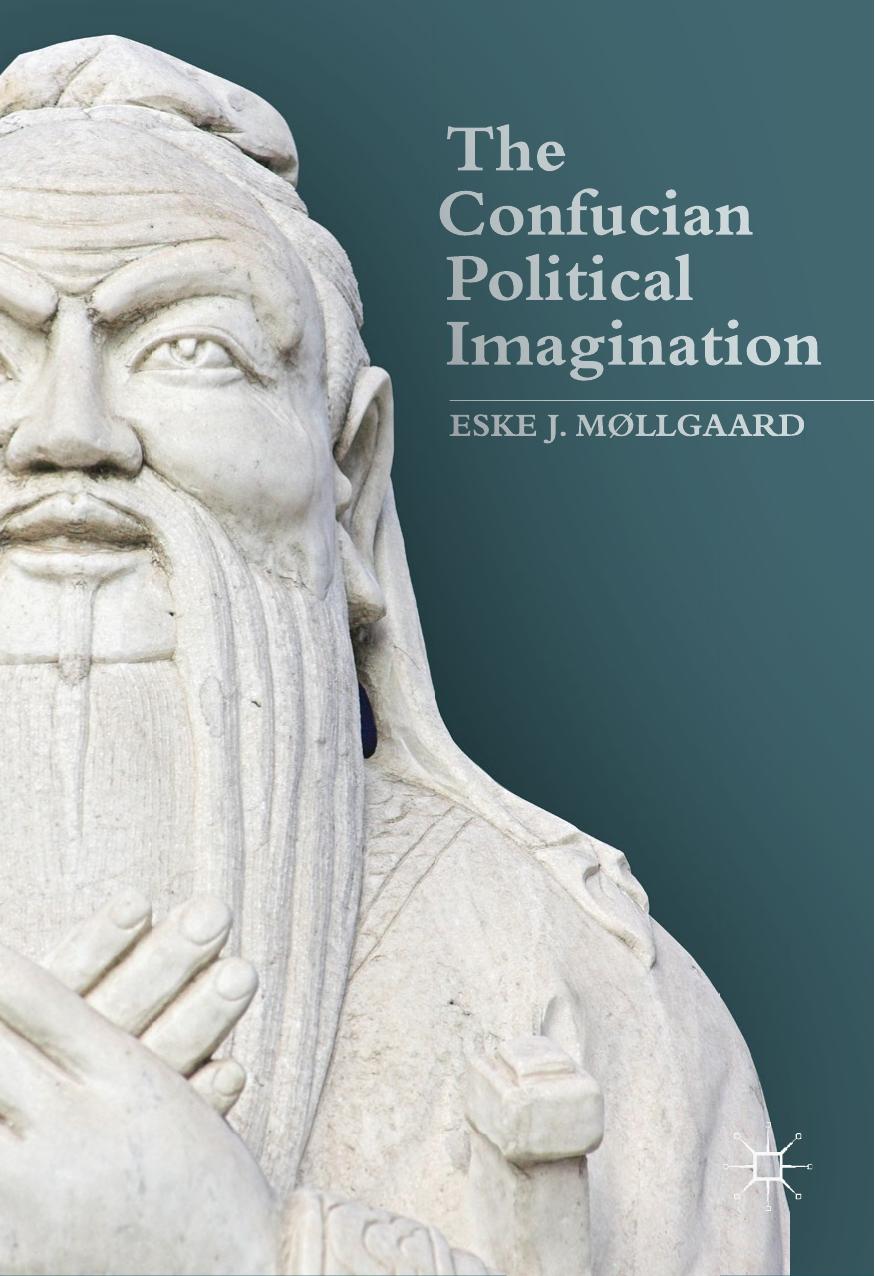
Author:Eske J. Møllgaard
Language: eng
Format: epub, pdf
Publisher: Springer International Publishing, Cham
The Selfish West
Tu begins his essay “Beyond the Enlightenment Mentality” by acknowledging the importance of Enlightenment values such as “liberty, equality, human rights, the dignity of the individual, respect for privacy, government for, by, and of the people, and the due process of law.” He points out, however, that the Enlightenment mentality has a dark side as well: its “instrumental rationality,” “aggressive anthropocentrism,” and “Faustian drive to explore, to know, to conquer, and to subdue” (Tu 1998: 3–4). Such critique of the Enlightenment has been voiced before by Western intellectuals, but Tu goes a step further and identifies the Enlightenment mentality with “self-interest and individual greed” (Tu 1998: 4), and in the course of the essay selfishness becomes Tu’s main charge against the Enlightenment mentality.
It may be surprising that Tu says that selfishness is the main characteristic of the Enlightenment mentality, for Enlightenment philosophers aspired to go beyond precisely self-interest, namely the self-interest invested in traditional, oppressive and unjustified belief-systems and power-structures. We should recall, however, that “selfish” is the label Confucians have traditionally put on their opponents. For example, Confucians were deeply concerned with the influence of Buddhism , a foreign religion, in China, and in their polemic against the Buddhists they labeled them “selfish” (si 私). To suggest that Buddhists, who take it as their central task to go beyond the self (the ego), are selfish is just as far-fetched as to claim that the Enlightenment mentality, which bases itself upon the ideal of universal reason, is ruled by selfishness. According to Confucians, however, both Buddhism and the Enlightenment mentality negate what Confucians take to be the ethical substance of society—filial piety, loyalty to the ruler, and so on—and that is selfish.
If the Enlightenment mentality is essentially selfish, then, of course, you cannot establish a true community based on that mentality, and Tu notes “the conspicuous absence of the idea of community, let alone the global community, in the Enlightenment project” (Tu 1998: 5). Since the very idea of a modern civil society is grounded in Enlightenment values, it is puzzling that Tu can claim that the Enlightenment mentality lacks the idea of community, and since Kant wanted to create a global community of perpetual peace, it seems wrong to suggest that Enlightenment philosophers neglect the global community. Tu’s Confucian idea of community is, however, entirely different from the modern idea of a civil society. According to Tu the Confucian community is based on self-cultivation and there is “a dynamic transformation from self to family, to community, to state, and to the world as a whole” (Tu 1989: 115). The classical formulation of this progression is found in The Great Learning (Daxue), which says that one must first cultivate oneself (xiushen 修身), then establish harmony in the family (qijia 齊家), then one can govern the state (zhiguo 治國), and, finally, pacify the empire (ping tianxia 平天下) (Zhu 1983: 3). As Theodore de Bary points out, however, in this traditional Confucian sequence the word “community” does not appear, and yet Tu regularly inserts the word whenever he repeats the sequence in his essays (de Bary 1991: 98).
Download
The Confucian Political Imagination by Eske J. Møllgaard.pdf
This site does not store any files on its server. We only index and link to content provided by other sites. Please contact the content providers to delete copyright contents if any and email us, we'll remove relevant links or contents immediately.
| Anthropology | Archaeology |
| Philosophy | Politics & Government |
| Social Sciences | Sociology |
| Women's Studies |
The remains of the day by Kazuo Ishiguro(8999)
Tools of Titans by Timothy Ferriss(8396)
Giovanni's Room by James Baldwin(7346)
The Black Swan by Nassim Nicholas Taleb(7129)
Inner Engineering: A Yogi's Guide to Joy by Sadhguru(6796)
The Way of Zen by Alan W. Watts(6614)
The Power of Now: A Guide to Spiritual Enlightenment by Eckhart Tolle(5782)
Asking the Right Questions: A Guide to Critical Thinking by M. Neil Browne & Stuart M. Keeley(5775)
The Six Wives Of Henry VIII (WOMEN IN HISTORY) by Fraser Antonia(5515)
Astrophysics for People in a Hurry by Neil DeGrasse Tyson(5190)
Housekeeping by Marilynne Robinson(4448)
12 Rules for Life by Jordan B. Peterson(4305)
Ikigai by Héctor García & Francesc Miralles(4274)
Double Down (Diary of a Wimpy Kid Book 11) by Jeff Kinney(4272)
The Ethical Slut by Janet W. Hardy(4253)
Skin in the Game by Nassim Nicholas Taleb(4250)
The Art of Happiness by The Dalai Lama(4130)
Skin in the Game: Hidden Asymmetries in Daily Life by Nassim Nicholas Taleb(4007)
Walking by Henry David Thoreau(3962)
